

The History of House Music 003: Greg Wilson and the Forgotten Foundations of UK House Music
In the grand narrative of house music, certain names are etched in stone: Frankie Knuckles at the Warehouse, Larry Levan at Paradise Garage, Ron Hardy at the Music Box. As we explored in our previous article about Jesse Saunders’ groundbreaking “On and On”, these Chicago and New York pioneers were creating a revolution in 1983-1984. But there’s a glaring omission in most histories; a DJ who created the cultural soil in which house music would flourish in the UK, yet never lived to see the harvest. That DJ is Greg Wilson, and his story is one of the most remarkable in dance music: a pioneer who walked away at the peak of his powers in December 1983, just weeks before Jesse Saunders pressed “On and On” to vinyl, only to return twenty years later, wielding the same reel-to-reel tape machine he’d used in his youth. To even greater success.
The Parallel Evolution: While Chicago Created the House, Manchester Prepared the Ground
When Jesse Saunders sat down in early 1984 to recreate that stolen bootleg; the moment that birthed “On and On” and house music records; few people in the UK had heard of him. But they knew Greg Wilson. While Frankie Knuckles was reconstructing disco records at The Warehouse using his reel-to-reel tape machine, Wilson was doing something remarkably similar 4,000 miles away in Manchester, using the exact same technology for the exact same purpose: keeping dancers moving to a sound that didn’t yet have a name.
The timing is cosmically significant. Wilson’s final gig was December 29, 1983, at Legend in Manchester - just weeks before Saunders created “On and On” in early 1984. Wilson had spent three years preparing British ears for something he couldn’t have known was coming. He’d taught them to love drum machines, to embrace synthesisers, to accept that the future of Black dance music would be electronic. When house records started arriving from Chicago in 1985-1986, British dancers didn’t need convincing. Wilson had already done the work.
The Rise: Manchester’s Mixing Revolutionary (1975-1983)
Greg Wilson began DJing in 1975 at the age of fifteen, cutting his teeth in the Merseyside club scene during disco’s golden age. But it was his move to become a “black music specialist” in the early 1980s that changed everything. In 1981, Wilson took over the Wednesday night funk session at Legend in Manchester, a club with a predominantly Black audience and a state-of-the-art sound system featuring three Technics SL-1200 turntables. Simultaneously, he held a Tuesday residency at Wigan Pier, another Northern powerhouse.
These weren’t just club nights; they were laboratories. While most British DJs were still announcing records with a microphone between songs, Wilson had discovered something transformative during a 1980 visit to Club Librium in Essen, Germany, where he witnessed seamless mixing for the first time. “It was like a light bulb going off,” he later recalled. He brought this technique back to the UK, becoming the first DJ to demonstrate live mixing on British television when he appeared on Channel 4’s The Tube in 1983, infact the mixer shown in the clip below, the Matamp Supernova, was designed by Froggy and Mat Mathias of Matamp. These mixers were hand-built, only 300 were ever made. Across the pond, the same year Knuckles was perfecting his craft at the Power Plant, and Hardy was going wild at the Music Box, Greg was ripping it up playing - David Joseph - You Can't Hide (Your Love From Me)
What made Wilson truly revolutionary wasn’t just the technical innovation, it was his ears. While the UK jazz-funk scene was stagnating, Wilson was breaking records straight off the plane from New York: electro-funk, boogie, early hip-hop, and proto-house that nobody else was playing. His record supplier, Spin Inn in Manchester, would get US imports on a Friday, and by Tuesday night, Wilson would be debuting them to packed dancefloors.
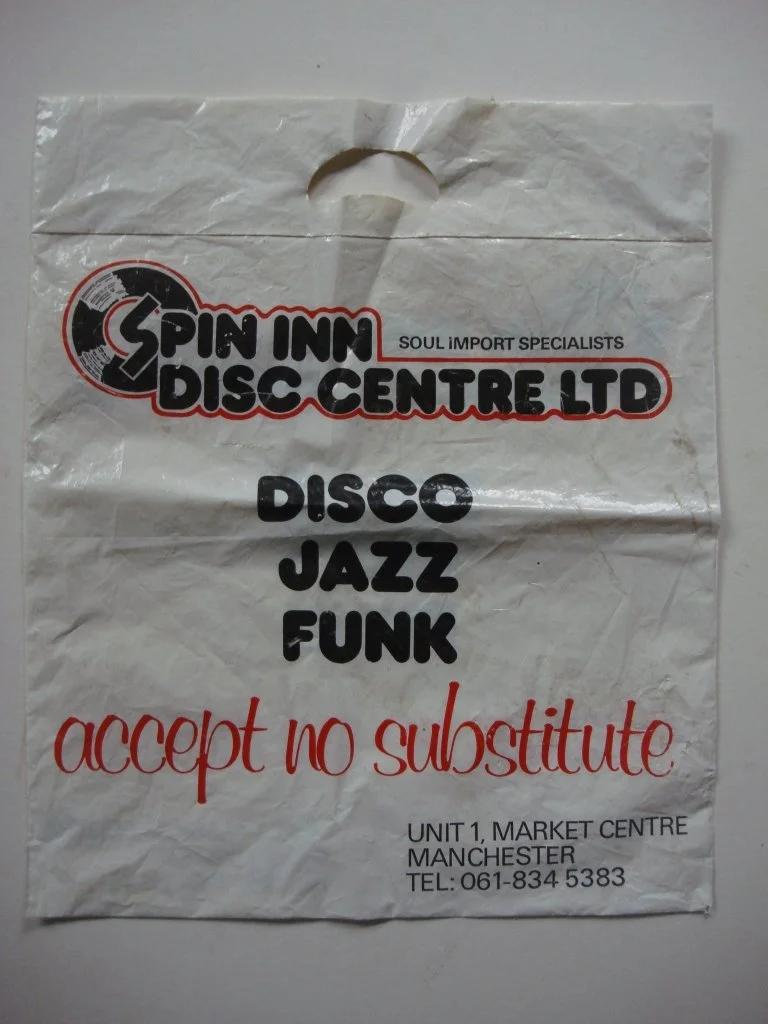
Spin Inn, Manchester
The Sound: Electro-Funk and the Proto-House Connection
Here’s where most house music histories get it wrong: they jump straight from disco to house, erasing the crucial 1982-1984 electro-funk era that Wilson championed. This wasn’t just filler—this was the bridge. As we discussed when exploring what came after “On and On”, early house producers like Farley Jackmaster Funk have admitted they were “just stealing everybody’s basslines” and “regurgitating disco.” But they were also stealing from electro-funk.
The records Wilson was playing in Manchester between 1982-1983 shared the same DNA as the early house tracks being created in Chicago. Both were responses to disco’s supposed death. Both embraced drum machines and synthesizers. Both were created by and for Black communities who refused to let dance music die.
Wilson’s Essential Electro-Funk Selections (1982-1983):
Afrika Bambaataa & The Soul Sonic Force – “Planet Rock” (1982): The template. Kraftwerk’s “Trans-Europe Express” reimagined through the Bronx, creating a futuristic funk blueprint that would influence house, techno, and everything after. When Saunders used his Roland TR-808 to create “On and On,” he was building on the foundation that “Planet Rock” laid.
Hashim – “Al-Naafiysh (The Soul)” (1983): A 13-year-old from Brooklyn made this electro monster, which Wilson introduced to The Haçienda and which remained a classic through the acid house era. Its minimalist, mechanical funk was utterly alien and utterly irresistible—the same aesthetic Saunders would embrace on “On and On.”
Peech Boys – “Don’t Make Me Wait” (1982): Produced by Larry Levan at Paradise Garage, this was where boogie met the future. Its drum machine swing and gospel vocals would directly influence Chicago house producers like Marshall Jefferson. The connection between Levan’s New York garage sound and Chicago house was undeniable—both were electronic mutations of disco’s spiritual core.
D-Train – “You’re The One For Me” (1982): Hubert Eaves III’s production married Salsoul strings with electronic percussion, creating what Wilson described as “disco-funk”—the smooth side of the new sound. This was the template for vocal house before vocal house existed.
Klein + M.B.O. – “Dirty Talk” (1982): Italian-produced electro-boogie with a relentless groove that demonstrated dance music’s new international language. The Italians understood what Chicago would soon prove: drum machines transcended borders.
Shannon – “Let The Music Play” (1983): This launched the Latin Freestyle movement, another electro-funk offshoot that would run parallel to house throughout the mid-80s. Its producer, Mark Liggett, used the same Roland TR-808 and Jupiter-8 combination that would define early house.
Extra T’s – “E.T. Boogie” (1982): Raw, minimal, unstoppable—the kind of stripped-down electro that prepared ears for the even more minimal house tracks to come. When “Music is the Key” by J.M. Silk emerged in 1984 (as we discussed in our exploration of the second house record), dancers who’d moved to “E.T. Boogie” knew exactly what to do.
The Boogie Foundation:
Wilson also championed what London would later call “boogie” - though he called it “disco-funk” at the time:
Gwen McCrae – “Keep The Fire Burning” (1982)
S.O.S. Band – “High Hopes” (1982)
Aurra – “Such A Feeling” (1982)
The Jammers – “And You Know That” (1982, Shep Pettibone mix)
These records shared DNA with early house: four-on-the-floor kicks (or close), synthesizer basslines, electronic percussion, gospel-influenced vocals. When Frankie Knuckles started reconstructing disco at The Warehouse and when Jesse Saunders created “On and On,” British dancers who’d been moving to Wilson’s selections at Legend and Wigan Pier were already primed for the sound.
The Parallel Universe: New York Garage Meets Manchester Funk
While Wilson was breaking electro-funk in Manchester, another crucial sound was developing in New York at Paradise Garage under Larry Levan. As we explored in our article about The Warehouse and Frankie Knuckles, both Knuckles and Levan had learned DJing together at the Continental Baths. Now they were developing parallel sounds in different cities - Knuckles creating house in Chicago, Levan creating garage in New York.
Wilson was tracking both evolutions, importing records that would become classics in all three cities:
Loose Joints – “Is It All Over My Face” (1980, Arthur Russell): Produced by Levan, this was proto-house from New York, two years before Chicago’s revolution. Its dub-influenced, electronic approach influenced both garage and house.
Taana Gardner – “Heartbeat” (1981, Larry Levan mix): Another Levan production for West End Records that proved electronic dance music could be deeply soulful. When DJ International Records started releasing tracks in 1985, they were following a blueprint Levan had sketched.
Visual (Boyd Jarvis) – “The Music Got Me” (1983): According to Blues & Soul magazine, this Prelude Records release is where contemporary garage music truly began. Wilson was playing it in Manchester the same year Jesse Saunders was preparing to record “On and On.”
This NYC garage sound - soulful, dubby, electronic - would prove just as influential on UK house culture as Chicago. Wilson’s sets contained both strains, creating an eclectic foundation that British DJs would build upon when house fully arrived.
The Departure: December 1983 – Just Weeks Before “On and On”
Then, stunningly, Wilson walked away. His ego, he admits, told him to quit at the top. Blues & Soul magazine had voted his nights at Legend and Wigan Pier the best in the North, and Wilson himself Best DJ. He’d kicked off The Haçienda’s first dedicated dance night (the predecessor to the legendary “Nude” night that would become synonymous with acid house). He’d co-written and produced most of the groundbreaking Street Sounds UK Electro album in 1984, which introduced an entire generation of British kids, Black and white, to the electro-funk sound.
His final gig was December 29, 1983, at Legend in Manchester. He was 23 years old.
The timing was cosmically cruel. In Chicago, Jesse Saunders was weeks away from recording “On and On” in early 1984. Frankie Knuckles was beginning to play the first true house records at the Power Plant. Marshall Jefferson was starting to experiment with the Roland TB-303. The entire trajectory of dance music was about to pivot, and Wilson, the man who’d laid the groundwork in the UK, would miss it entirely.
The Wilderness: 1984-2003 – House Music Conquers the World Without Him
For nearly twenty years, Greg Wilson disappeared from DJing. He attempted record production, struggled for opportunities, relocated to London, and watched from the sidelines as acid house exploded in the very clubs where he’d pioneered mixing.
Farley “Jackmaster” Funk’s “Love Can’t Turn Around” hit number one in the UK charts in 1987, a stunning achievement for a sound that had barely existed three years earlier. But Wilson wasn’t there to witness it. The Second Summer of Love happened without him. The Happy Mondays and Stone Roses - bred in the same Manchester scene he’d helped create - broke massive records while he watched on.
The electro-funk era Wilson had championed was erased from the narrative, dismissed as a quirky precursor rather than the essential bridge it was. In the early 2000s, exploring the internet properly for the first time, Wilson discovered that his contributions had been “bafflingly absent” from UK dance music histories. The years 1982-1984 - his years, had become a blind spot.
The Return: 2003 and the Reel-to-Reel Renaissance
In 2003, Wilson launched electrofunkroots.co.uk, a website documenting the early '80s black music scene he’d experienced. The response was immediate. People who’d been there, and people who wished they had been, began reaching out. DJ bookings followed.
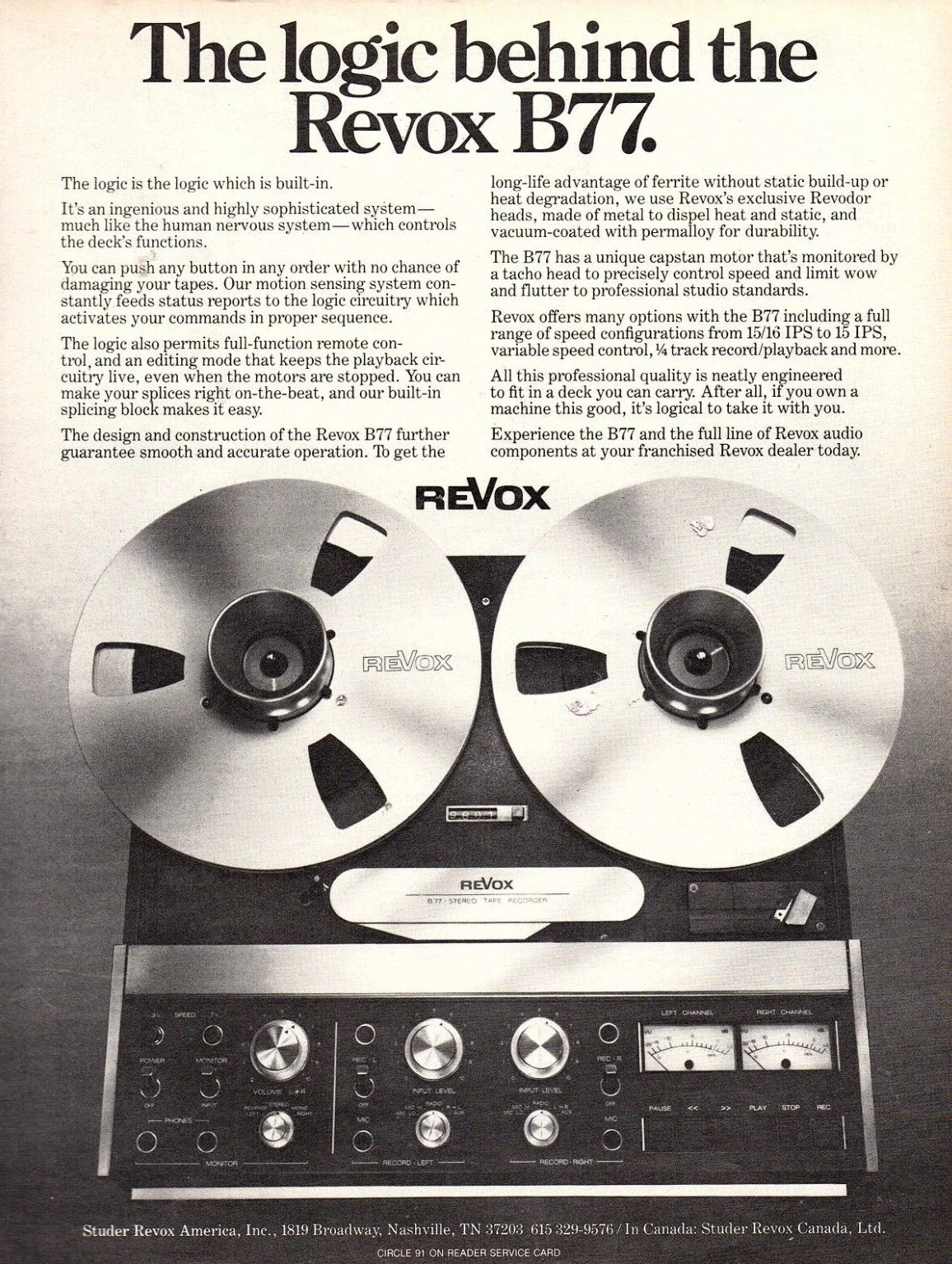
In December 2003, at The Attic in Manchester for a Music Is Better night, Greg Wilson returned to the decks after two decades. But this wasn’t a nostalgia act. Wilson had something nobody else had: his original Revox B77 reel-to-reel tape machine from the 1980s, loaded with his own edits made in the era - extended breaks, clever loops, custom blends that existed nowhere else.
Just as Frankie Knuckles used his reel-to-reel to “reconstruct records to work for my dancefloor”, Wilson had been doing the same in Manchester. Now, two decades later, those original tape edits became historical artifacts - physical proof of the parallel evolution happening across the Atlantic.
The reel-to-reel became his signature. In an age of digital DJing, Wilson’s analog approach was revolutionary all over again. His “Credit to the Edit” compilations (2005, 2009, 2018) showcased decades of editing craft, from 1980s tape splicing to modern digital reworks, all performed with a curator’s ear and a historian’s reverence.
In January 2009, Wilson’s Essential Mix for BBC Radio 1 became an instant classic. Radio 1 later selected it as one of the top ten Essential Mixes in the series’ 17-year history. Rolling Stone named it among “The 25 Greatest Internet DJ Mixes of All Time.” What made it special was what had always made Wilson special: eclecticism. Electro-funk flowed into disco, into deep tech house, touching 80s pop and indie along the way - a contemporary blend that proved the lines between genres had always been artificial.
The Legacy: Joining the Dots Between Chicago, New York, and Manchester
Greg Wilson’s importance to house music isn’t just historical curiosity; it’s foundational. While Jesse Saunders was creating “On and On” in Chicago and DJ International Records was building house music’s infrastructure, Wilson had already created the conditions for house music to flourish in the UK by:
Pioneering mixing techniques that became standard—he was mixing live on national TV in 1983, the same year “On and On” was recorded.
Championing electronic black music when it was still underground and strange, preparing ears for house’s electronic aesthetic.
Educating dancers’ ears to accept drum machines, synthesizers, and minimalism—the exact tools Saunders, Jefferson, and the Chicago pioneers used.
Building the infrastructure—clubs, audiences, DJ culture—that house would inherit when it crossed the Atlantic.
Demonstrating eclecticism as a virtue, showing that great DJs are curators, not genre specialists.
When house records started arriving from Chicago in 1985-1986—tracks like Marshall Jefferson’s “Move Your Body” and Joe Smooth’s “Promised Land”', British DJs didn’t have to explain what a drum machine was, or why a track might have no live instruments, or why the breaks were extended and hypnotic. Greg Wilson had already done that work.
The people who’d danced at Legend and Wigan Pier - who’d moved to “Planet Rock” and “Don’t Make Me Wait” and “Al-Naafiysh” - became the first generation of British house heads. The DJs who’d watched Wilson cut and scratch on The Tube (including a young Norman Cook, later Fatboy Slim) absorbed lessons about showmanship and technical mastery. The producers who’d bought Street Sounds Electro compilations learned that British artists could compete with American innovation.
The Complete Timeline: Chicago, New York, and Manchester
Understanding Wilson’s role requires seeing house music’s emergence as a three-city story:
Chicago (1977-1984): Frankie Knuckles at The Warehouse reconstructs disco using reel-to-reel edits. Jesse Saunders created “On and On” in early 1984.
New York (1977-1987): Larry Levan at Paradise Garage develops garage house, blending disco with dub and electronic production.
Manchester (1981-1983): Greg Wilson at Legend and Wigan Pier breaks electro-funk and proto-house, preparing UK audiences for the Chicago invasion.
The Explosion (1985-1989): DJ International and Trax Records export Chicago house globally. British clubs embraced the sound immediately, because Wilson had laid the groundwork.
The Unfinished Story
Today, at 65, Greg Wilson continues to DJ worldwide, still using his trusty Revox B77 alongside modern equipment, still educating younger generations about the invisible connections between disco, electro, house, and techno. His 2020 book Greg Wilson’s Discotheque Archives and his blog “Being A DJ” (2010-2020) helped him reclaim the electro-funk era from obscurity.
The tragic irony remains: the man who built the foundation left before the house was constructed. But perhaps that’s precisely why his story matters. As we’ve explored in our series on house music history, the genre didn’t emerge from nowhere in 1984. It evolved from disco, electro, boogie, garage, and the fearless experimentation of DJs on multiple continents who played what moved them, consequences be damned.
When Jesse Saunders created “On and On,” he wasn’t working in isolation—he was part of a global network of DJs and dancers who’d been pushing toward this sound for years. Wilson was part of that network, even if he never met Saunders or knew what was happening in Chicago.
Every time a British DJ mixes seamlessly between genres, they’re walking a path Greg Wilson cut. Every time a producer reaches for a vintage edit or an obscure boogie record, they’re digging in soil Wilson fertilized. Every time house music is celebrated as a continuum rather than a revolution, Wilson’s name should be spoken alongside Knuckles, Levan, Saunders, and the other pioneers who changed everything.
The prophet left before the promise. But the sermon lived on, echoing from Manchester to Chicago and back again, proving that house music was never just one city’s story; it was the world learning to dance together, one beat at a time.
Further Listening:
Greg Wilson’s 2009 Essential Mix (BBC Radio 1)
Credit to the Edit compilations (2005, 2009, 2018)
Street Sounds Electro series (1983-1984)
“Greg Wilson’s Early 80s Floorfillers” mixes (available on Mixcloud)
Essential Reading:
Greg Wilson’s Discotheque Archives (2020)
